Hair Tattoo: Barber Shop Game
- 4.3
- Rating
- 100.00M
- Installs
- Free
- Price
 Analysis by App-foxy
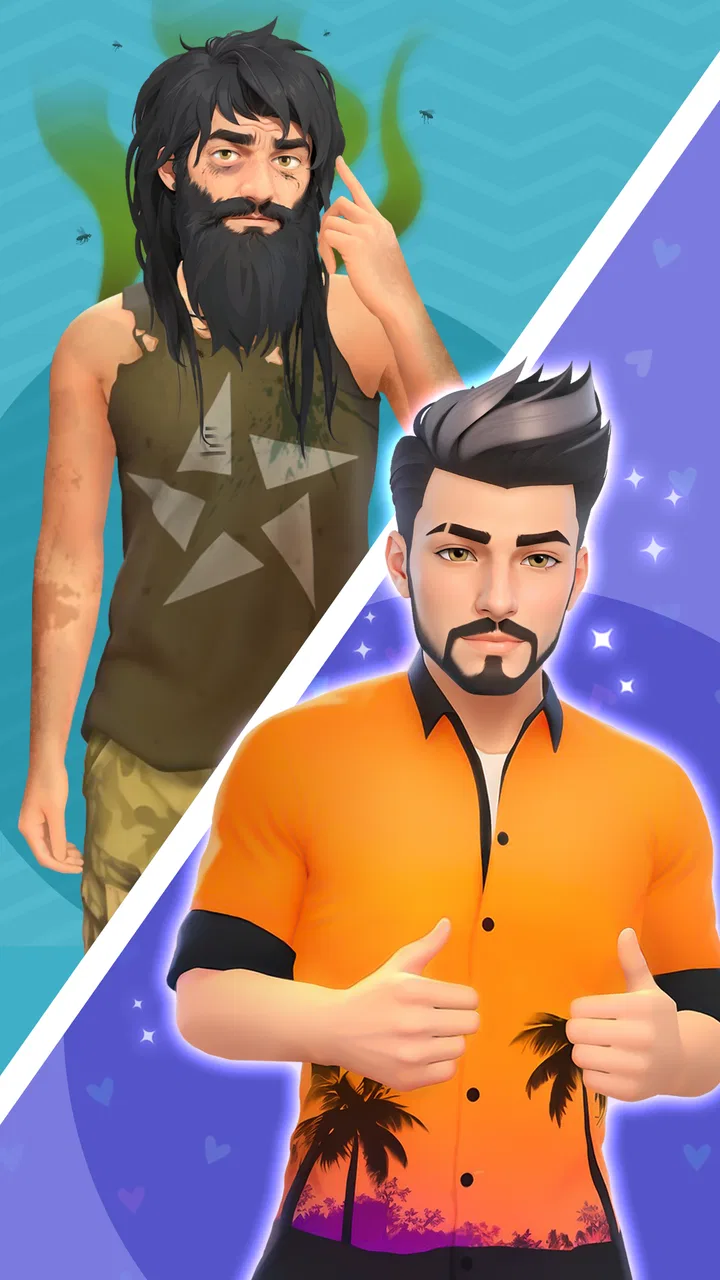
I picked up Hair Tattoo: Barber Shop Game expecting a quick barber-themed time killer, and that is exactly where it makes the best first impression. The premise is easy to understand: you work on a customer’s hair, shape a design, and try to leave the head looking clean enough to feel satisfying. It is a simulation game from CASUAL AZUR GAMES, but it is much closer to a compact, tactile activity than to a detailed professional barber simulator.
What kept me playing was the immediate connection between an action and its result. I make a cut, line, or shaved section, and the screen shows me whether the shape is becoming more convincing. That direct feedback gives each small job a clear purpose. I am not reading long instructions or managing a complicated shop; I am concentrating on the next movement and the appearance it creates.
The game is free to start and carries a Teen content rating. It has reached over 100 million installs and holds a 4.2 average from around 95 thousand ratings, which gives a good indication of how broadly the simple formula appeals. Still, popularity does not make it the right choice for everyone. If you want deep character management, realistic tools, or a genuine business simulation, this will feel light. If you want short sessions built around visible creative changes, it is much easier to recommend.
You May Also Like

 AccuWeather: Weather Radar
AccuWeather Review: A Quick, Clear Forecast for Everyday Decisions
For everyday plans, the best forecast is the one you can understand quickly. AccuWeather makes rain timing, radar, and local conditions easy to act on, with a few trade-offs.

 Hill Climb Racing
Why Hill Climb Racing Still Turns Crashes Into One More Run
A tiny car, a bumpy hill and one more upgrade: Hill Climb Racing keeps resurfacing because its simple chaos makes every near-miss feel personal.

 AliExpress - Shopping App
AliExpress Makes Global Shopping Feel Personal, but Shoppers Bear the Risk
AliExpress turns a global marketplace into a pocket-sized discovery engine. Its reach is useful, its shopping loop compelling, and its trade-offs easy to miss.

 Lords Mobile: Kingdom Wars
Lords Mobile Is a Kingdom-Building Routine, Not a Quick Match
A case-by-case verdict on the building, battles, device demands, and social commitments that make Lords Mobile rewarding for some players and exhausting for others.

 PDF Scanner app - TapScanner
TapScanner Makes Paperwork Easier to Capture, Check, and Share
TapScanner makes scanning with a phone feel less like a rescue operation and more like a dependable step in getting work done. Its capture tools are useful, though not flawless.

 Block Blast!
 Shows How Much a Puzzle Game Can Leave Out
A quiet grid game shows why puzzle players increasingly value instant clarity, repeatable skill and low-pressure play—and where the genre still needs to catch up.
More From Our News Desk
View All News


How the barber loop feels from the first cut to the next customer
I find the barber loop easiest to enjoy when I treat each customer as a fresh visual puzzle: first identify the broad shape, then make smaller adjustments, and finally pause to judge the whole result. That gives the simple actions a little rhythm without turning a quick session into a project. The next useful question is what to check when the experience feels less smooth than expected.
The first action is simple, but the screen makes it feel important
The strongest part of the opening experience is that the game does not bury its main idea. I can start working on a hairstyle almost immediately, and the visual task tells me what matters. The head is both the workspace and the result screen, so every movement is easy to judge. That makes the game approachable for someone who has never played a simulation title before.
The controls are designed around touch rather than menus. I focus on where the tool is going and how much hair is being changed. This is a useful distinction from many management games, where the main decisions happen in menus and the result is reduced to a number. Here, the physical-looking action is the entertainment. Even a small adjustment can change the balance of the design.
I found it helpful to treat each haircut as a sequence of zones rather than trying to finish the whole head at once. I begin with the broad area that needs the most obvious change, then slow down around edges and details. That approach reduces the chance of ruining a clean shape with an overconfident final pass. It also makes the progress easier to read because the untouched hair remains a visual reference.
This is one of the game’s less obvious strengths: it rewards attention without demanding expert knowledge. I do not need to know real barbering terminology to understand that an uneven line looks wrong or that a design needs breathing room. The screen communicates enough through contrast and shape for me to learn by watching the result.
Feedback arrives after nearly every meaningful movement
The feedback rhythm is what turns a basic cutting activity into a playable loop. I act, look at the change, and decide whether to continue or correct it. That pause is short, but it matters. Without it, the experience would be no more engaging than repeatedly tapping through a checklist.
Good results feel visible rather than abstract. A cleaner section looks cleaner, and a more recognizable pattern gives the job a stronger sense of completion. When I make a rougher move, the problem is also easy to notice. The game therefore creates a small conversation between my input and the screen: I try something, the hairstyle answers, and I adapt.
That rhythm works particularly well when I have only a few minutes. For example, I can play during a short break, complete a focused part of a haircut, and still feel that I have done something rather than merely waiting for a timer. The experience does not require the long concentration of a strategy game, although careful designs can make me stay longer than I expected.
There is a trade-off here. The tactile presentation suggests precision, but the game remains an accessible mobile simulation rather than a strict training tool. I would not use it to learn real haircutting technique. The movements are useful for understanding visual balance and patience, not for replacing hands-on instruction. That difference is important for parents, younger players, or anyone downloading it because the barber theme sounds educational.
The reward is the finished look, not just the next unlock
The main reward is seeing a hairstyle become recognizable and presentable. I enjoy the moment when a rough surface starts to look intentional, because the improvement comes from my sequence of actions. That visual payoff is more satisfying than a generic points counter would be, even though the broader progression gives the sessions a reason to continue.
The game also benefits from the natural curiosity of its theme. Once I have completed one kind of design, I want to see what the next customer or task asks me to create. That curiosity is enough to pull me into another round, especially when the previous result felt clean. The reward is therefore a combination of completion, visual feedback, and the expectation of a fresh variation.
Players should also know how the free model affects the experience. The game is free to download, while in-app purchases are listed at $3.99 per item. I would approach those purchases as optional convenience rather than part of the reason to install it. The basic appeal is the cutting loop itself, so I would first play without spending and decide whether the repeated activity genuinely holds my attention.
That recommendation is practical because short simulation games can feel exciting during the first few sessions and repetitive later. A purchase makes more sense only if the player already enjoys returning to the barber chair. It is not a good idea to spend simply because a later moment feels slower or because the desire to see more content arrives before the core actions have become enjoyable.
The reset is what makes another session tempting
After a haircut is finished, the game’s satisfaction comes from letting that result stand briefly before moving on. The completed design acts as a visual endpoint, but it is not a permanent project that I need to maintain. That reset is crucial to the format. I can appreciate what I made, then begin again without carrying a complicated shop state or a long list of obligations.
This makes the game suitable for casual routines. I can play one session while waiting for an appointment, return later, and understand the activity again without reconstructing a complicated strategy. The low commitment is a real advantage over deeper simulation games, where skipping a few days can mean forgetting systems, resources, or objectives.
At the same time, the reset limits long-term attachment. I do not approach each customer as a character with a personal story, and I am not building a barber business with decisions that permanently reshape the experience. The work is intentionally disposable: finish the look, enjoy the result, and start another. Players who need persistent progress or a strong narrative may find that structure too thin.
I also think the reset encourages experimentation. Because a single haircut is not a multi-hour investment, I feel more comfortable trying a different approach or being less cautious with a design. That is a useful way to play it: not as a serious test of perfection, but as a series of small visual puzzles where each attempt teaches me how much control the game gives me.
Small techniques make the loop more satisfying
My first practical tip is to avoid rushing through the center of a design just because it is the largest area. Large movements create quick progress, but the edges determine whether the final haircut looks deliberate. I get better results by reserving time for the boundary between shaved and unshaved sections, where a careless pass is most noticeable.
My second tip is to use the existing shape as a guide instead of treating every customer as a blank canvas. The hair already on screen provides a scale reference. I compare the width of one side with the other and look for visual weight before adding more detail. This is more reliable than trying to remember the intended pattern while moving quickly.
A third useful habit is to stop briefly before the final pass. The urge to keep cutting can turn a nearly finished design into an overworked one. I look at the whole head, not just the spot under the tool, and ask whether another movement will improve the shape or merely remove more hair. That pause is especially helpful for players who are used to tapping constantly in arcade games.
These habits do not transform the title into a professional simulator, but they make the casual loop feel more skillful. They also reveal the game’s real appeal: it is less about discovering a hidden management system and more about improving visual judgement through repeated, low-pressure attempts.
Where it fits among other simulation games
Compared with restaurant, city, or vehicle simulations, this barber game is much narrower. There are fewer layers between the player and the action, so it starts faster and asks for less planning. That makes it a better choice when I want immediate interaction rather than a long progression system.
Compared with creative drawing apps, it is more structured. I am not given a completely open canvas where every decision is possible. The haircut context gives me boundaries, a recognizable goal, and a finished result that can be judged quickly. The benefit is accessibility; the cost is reduced freedom for players who want to design anything from scratch.
It also differs from real-world barber-learning apps because the priority is entertainment. The visual feedback can teach patience, symmetry, and the value of checking a line from a distance, but it does not cover sanitation, hair texture, tool safety, consultation, or the physical feel of cutting hair. Someone preparing for barber school should choose an instructional resource instead.
For a child, the Teen rating is worth considering before installation. The premise may look harmless and playful, but the age label should guide the decision rather than the cartoon-like presentation alone. Families should also remember that the free entry point and optional purchases can make device-level purchase controls sensible, especially if a younger player uses the phone or tablet.
Performance expectations and who should skip it
The current version is 1.9.8.3c, and the listed minimum operating system is Android 5.1. That broad compatibility helps explain why the game can reach players on older devices, although the experience will still depend on the phone’s general performance and screen responsiveness. I would keep expectations realistic: this is a lightweight casual game, not a showcase designed around complex simulation.
I would recommend it to someone who enjoys tactile mobile activities, visual before-and-after changes, and sessions that can end after one completed task. It is also a good fit for players who like practicing a small action until the result looks cleaner. The barber theme gives those actions enough personality to avoid feeling like an ordinary shape-matching exercise.
I would skip it if I wanted a serious shop-management game, a realistic training tool, competitive multiplayer, or a story with characters I could follow. I would also be cautious if repetition quickly bothers me. The same basic appeal that makes the game relaxing can become its biggest weakness once the novelty of shaping hair has faded.
Another situation where a different option is better is when creativity matters more than guidance. A drawing or design app will offer broader control over color, composition, and subject matter. This game is stronger when I want a defined task and quick feedback, not when I want unlimited artistic freedom.
My verdict on the action-feedback-reward-reset cycle
Hair Tattoo: Barber Shop Game succeeds because its loop is easy to feel. I take an action, immediately inspect the haircut, enjoy the improvement when the shape works, and then receive a clean reason to begin another job. That cycle is simple, but the visual result gives it more personality than a generic tap-to-complete game.
Its limitations are equally clear. The simulation is shallow compared with full management titles, the repetition will not suit everyone, and the free-to-play structure means I would test the core experience before considering any $3.99 item. The Teen rating also deserves attention, and the game should not be mistaken for professional barber education.
Even with those qualifications, I found it easy to recommend as a short, hands-on casual game. CASUAL AZUR GAMES keeps the focus on the satisfying part: shaping a look and seeing whether it comes together. The best reason to play is not the promise of a deep barber career, but the small satisfaction of turning an untidy starting point into a design that looks intentional.
If that kind of visual, repeatable task sounds relaxing, the free entry point makes trying it straightforward. I would begin with short sessions, pay attention to the edges of each design, and judge the game by one question: do I feel curious about making the next haircut better? If the answer is yes, the reset becomes an invitation rather than a repetition, and the loop has done its job.
FAQs for Hair Tattoo: Barber Shop Game
01What is the main objective of Hair Tattoo: Barber Shop Game?
Hair Tattoo: Barber Shop Game is a simulation game where players act as barbers, creating unique hair designs and tattoos on virtual clients. The primary goal is to satisfy customers with creative and stylish haircuts, advancing through levels by unlocking new tools and styles as you progress.
02Is Hair Tattoo: Barber Shop Game suitable for children?
Yes, the game is generally suitable for children as it offers a fun and creative environment without inappropriate content. However, parental guidance is recommended to ensure that the in-game ads and purchases align with family preferences and to monitor any online interactions if applicable.
03Does Hair Tattoo: Barber Shop Game require an internet connection to play?
While Hair Tattoo: Barber Shop Game can be played offline for most of its content, certain features like special events, updates, and in-app purchases may require an internet connection. Playing online also allows players to access leaderboards and compete with friends.
04Are there in-app purchases in Hair Tattoo: Barber Shop Game?
Yes, Hair Tattoo: Barber Shop Game includes in-app purchases. Players can buy virtual currency and special items to enhance gameplay. These purchases are optional but can help speed up progress or unlock additional features. It's important to manage settings to prevent unauthorized purchases.
05What devices are compatible with Hair Tattoo: Barber Shop Game?
Hair Tattoo: Barber Shop Game is available for both Android and iOS devices. It is designed to run on most modern smartphones and tablets. To ensure optimal performance, check that your device meets the minimum system requirements specified in the app store description before downloading.
Pros
- Realistic barber tools enhance creativity.
- Wide range of hairstyles to choose from.
- Intuitive controls make gameplay smooth.
- Suitable for all age groups.
- Encourages creativity and design skills.
Cons
- In-app ads can be intrusive.
- Limited customization options over time.
- Graphics could be more detailed.
- Repetitive tasks may become boring.
- Requires internet for full features.

Hair Tattoo: Barber Shop Game
Gallery